

Blog
School Desk Chair Buying Guide: Comfort, Size and Durability

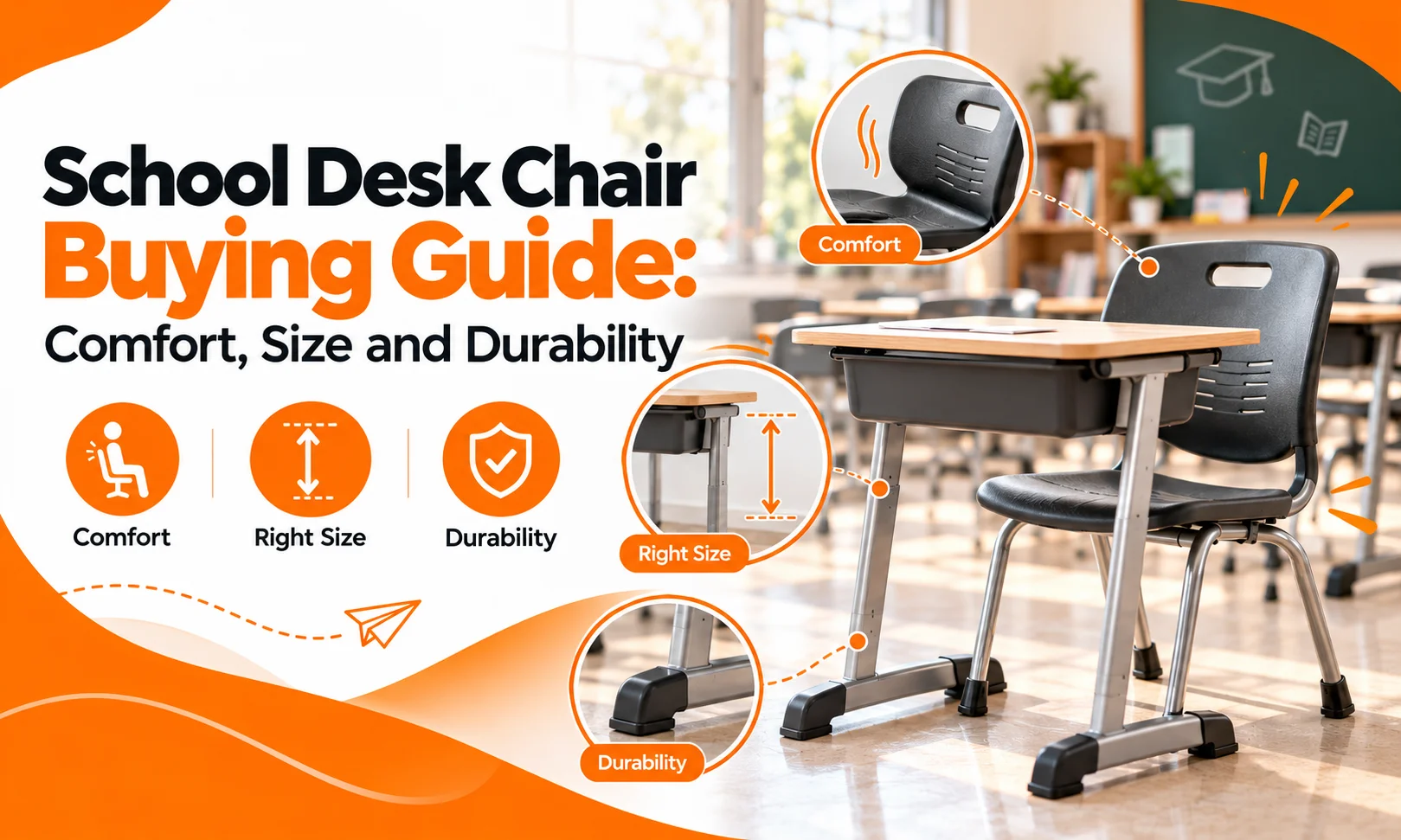
Buying a school desk chair sounds easy until the options start looking like a classroom-sized maze. One has a sturdy frame and another adjusts as the child grows. Far from these, the third looks lovely but wobbles like a table at a picnic. The right choice needs more deciding points than just a nice colour. It should fit the student, feel comfortable during lessons and survive everyday knocks, pencil marks and enthusiastic chair-scooting.
Moreover, parents also need a spot to study at home, while schools must think about safety, maintenance and budget. This guide shows what to check before you buy, without turning furniture shopping into homework for everyone.
What Should You Look for When Buying a School Desk Chair?
The ideal desk chair for children must be comfortable, stable and give adequate space to write. The color may impress the kid, but quality and fit must have the last word on the matter.
Comfort and Ergonomic Support
There needs to be an arrangement in which the child feels comfortable during his work. Otherwise, study hours would turn out to be a fight between a child and a horrible chair.
Check for a supportive backrest and a seat that fits the student’s body. Look for these signs of a good fit:
- Feet rest flat on the floor or a suitable footrest.
- Knees bend comfortably without the seat pressing behind them.
- The backrest supports the back.
- Elbows reach the writing surface without raised shoulders.
Thick cushions aren’t essential. A soft chair that forces a child into an awkward position misses the point.
Correct Desk and Chair Height
The desk and seat height must work well together. A desk that is too high raises the shoulders, while a low surface makes students bend forward.
Ask the student to sit and write for a minute before you decide. Can they reach the surface comfortably? Do their feet stay supported? That quick test reveals more than a polished product photo.
Stability, Safety and Everyday Use
Give the furniture a gentle shake. Does it wobble? Check the legs and joints, then inspect the edges for rough patches or sharp corners.
Also consider the room layout. A chair that slides neatly under a desk saves space in a crowded classroom. Small details matter when you have thirty students and approximately thirty different opinions about personal space.
How to Choose the Right School Desk and Chair Size?
Select furniture according to the student’s height and body proportions, not just their age or class. Children grow at different rates, and a desk that fits one student perfectly can feel awkward to another.
Choose Furniture for the Right Age Group
- Preschool and kindergarten: Look for low seating and compact desks. Children should get in and out easily, while rounded edges and stable bases add safety.
- Primary school: Choose a student desk and chair with enough room for notebooks and books. Check that the child sits comfortably without dangling feet.
- Secondary school: Older students need a wider writing surface for textbooks and multiple notebooks. Check the seat depth as well as the desk height.
- Home study areas: Measure the available space first. A giant desk looks impressive online but may leave barely enough room to open the bedroom door.
Treat age-based recommendations as starting points. Measure the student and check the product dimensions before buying.
How to Check Whether the Furniture Fits
Use this simple fit test before placing your order for school desk chairs.
- Ask the student to sit upright with their feet supported.
- Check that their knees bend comfortably and the seat does not press against the backs of their legs.
- Check the writing surface. The student should reach it without stretching or shrugging.
- Leave enough space for the books and stationery they actually use.
Buying for an entire school? Test a sample with students from the intended age group. It is much cheaper to discover a sizing problem with one desk than with an entire delivery.
Are Adjustable School Desks and Chairs Worth Buying?
Adjustable furniture accommodates growing children and students of different heights. It also delays the need to replace a suitable setup as a child grows.
Decor Dreamland features options such as the TN-A0014 Adjustable Classroom Desk and Chair Set.
Check the adjustment range and locking mechanism before choosing a model. The furniture must stay stable at the selected height. Adjustability is useful, but only when the student uses it comfortably.
Which School Desk Chair Materials Offer the Best Durability?
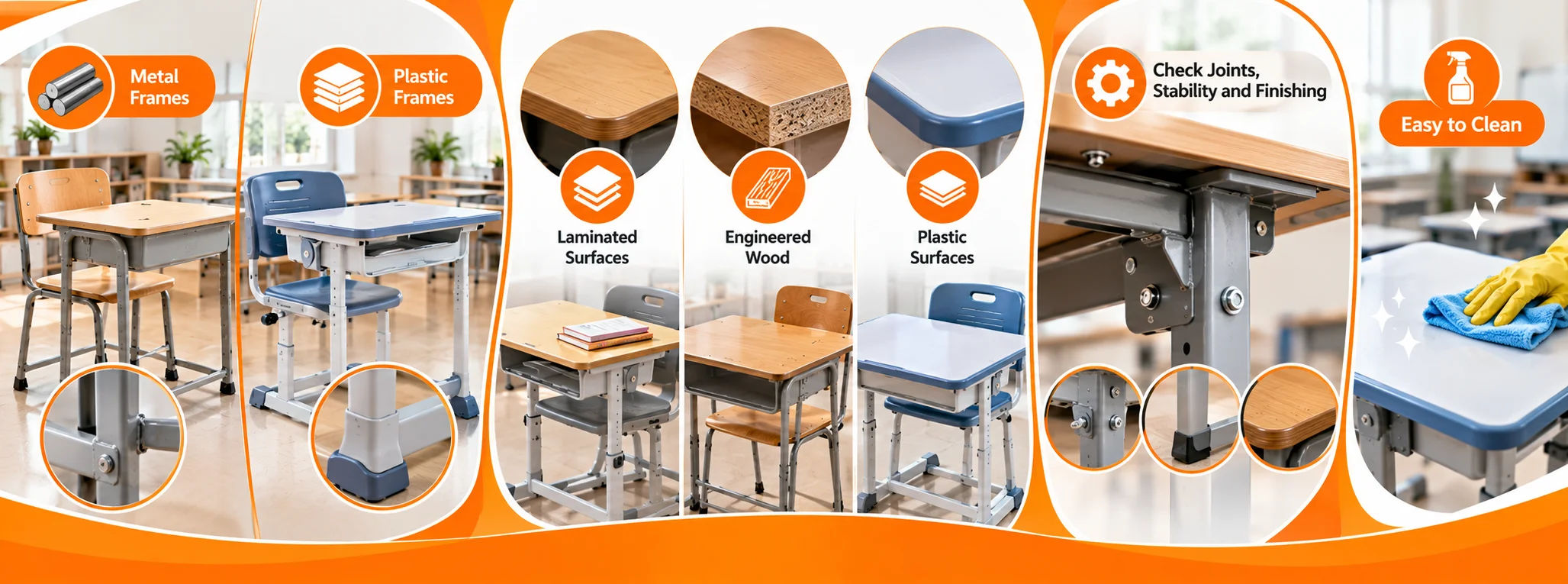
The best material depends on where the furniture will go and how much use it will handle. Metal provides a sturdy frame, plastic simplifies cleaning and laminated surfaces offer a good writing area.
Metal Frames vs Plastic Frames
Steel frames make sturdy supports for classroom environments. Check the joints and paint for signs of poor construction or exposed metal.
Plastic furniture weighs less and is easier to move. Quality plastic, such as ABS plastic desk and chair sets, works well for younger students and rooms that need frequent cleaning.
Some designs combine a metal frame with a plastic seat, offering strength with reasonable weight. Never judge durability by looks alone. A glittering finish does not replace tight joints.
Wooden, Laminated and Plastic Desk Surfaces
Each desk surface has its own advantages:
- Laminated surfaces: Easy to wipe down for everyday classroom use. Check the edges for peeling.
- Engineered wood: Provides a smooth writing area. Protect exposed edges from moisture.
- Plastic surfaces: Lightweight and easy to clean. Inspect for cracks or excessive flexing.
Decor Dreamland offers options in its school chair collection. Compare the construction and care requirements of individual products before making a choice.
Check Joints, Stability and Finishing
School furniture faces repeated movement throughout the day. Students shift around, drag chairs and occasionally treat furniture as part of an obstacle course.
Inspect the legs and joints, including metal welds and the points where the seat attaches to the frame. Place the desk on a level surface and check for rocking. Look for smooth edges and a consistent finish, as these details help you spot construction issues before the furniture reaches a classroom.
Choose Materials That Are Easy to Clean
Schools need furniture that staff can clean without spending half the day on one desk. Smooth plastic and properly finished laminated surfaces generally allow quick wiping, while textured materials require more effort.
Always follow the manufacturer’s maintenance recommendations. Use appropriate cleaning materials and wipe spills immediately to prevent damage to the finish.
Which Type of Student Desk and Chair Should You Buy?
The right design depends on the available space and how students will use the furniture. A classroom has different needs from a bedroom study corner.
Separate Desks and Chairs vs Combined Units
Combined desk-and-chair units keep classroom layouts organised and suit schools that need similar seating across multiple rows.
Separate desks and chairs offer more flexibility. You can replace one component without buying an entirely new setup, and they suit home study areas where students need extra room for books or a computer.
Measure the available floor space before buying. Even the best desk becomes a nuisance when it blocks a cupboard or leaves no room to move.
Home Study Furniture vs Classroom Furniture
For home use, prioritise the student’s comfort and the available room. A compact student desk and chair work perfectly for homework and reading.
Classroom furniture must handle more frequent use, so schools should focus on sturdy construction and easy cleaning. Also consider how easily staff can rearrange the furniture and clean beneath it.
Fixed-Height vs Adjustable Furniture
Fixed-height furniture suits students whose measurements fall within a suitable range, and it can simplify purchasing for a specific age group.
Adjustable models offer greater flexibility for growing children or shared classrooms. However, check their stability and adjustment range, and don’t pay extra for a feature you won’t use.
How to Compare School Desk and Chair Prices and Long-Term Value
The cheapest option is not always the cheapest to own. Compare the purchase price with construction quality and expected maintenance, because sometimes the extra money pays for a stronger build.
Which Features Justify a Higher Price?
A higher price usually reflects adjustable settings, stronger construction or a more durable finish. Choose features that solve a real problem. Adjustable furniture offers value when several years of growth lie ahead, while a costly finish matters less if you need furniture for temporary use.
Balance Budget, Durability and Maintenance
Schools must consider possible repairs and replacement costs alongside the initial price. A low-cost desk that needs frequent repairs can become expensive over time.
Parents can use the same approach. Choose furniture that fits the student today and suits their daily routine. A sensible purchase beats an impressive-looking desk that quickly becomes uncomfortable.
A Buying Checklist for You
Before placing an order, check the following:
- Measure the student and the available room.
- Test the chair’s comfort and support.
- Inspect the frame, joints and finish.
- Compare materials and cleaning requirements.
- Check the warranty and care instructions.
- Confirm the final price and delivery terms.
For bulk school orders, request a sample whenever possible, and ask about customised school desk and chair sets if you need specific sizes or colours. Test a sample before buying for the entire classroom.
Conclusion
Choosing a school desk chair means balancing comfort and size with durability. Start by checking the student’s posture and furniture fit. Then compare materials and construction before looking at price alone.
Parents need home study furniture, while schools require products that withstand regular use. A little measuring and inspection can prevent a lot of frustration later. Choose a setup that suits the student and the space instead of relying on appearances.